AI: Replacing Work or Re-imagining Worth
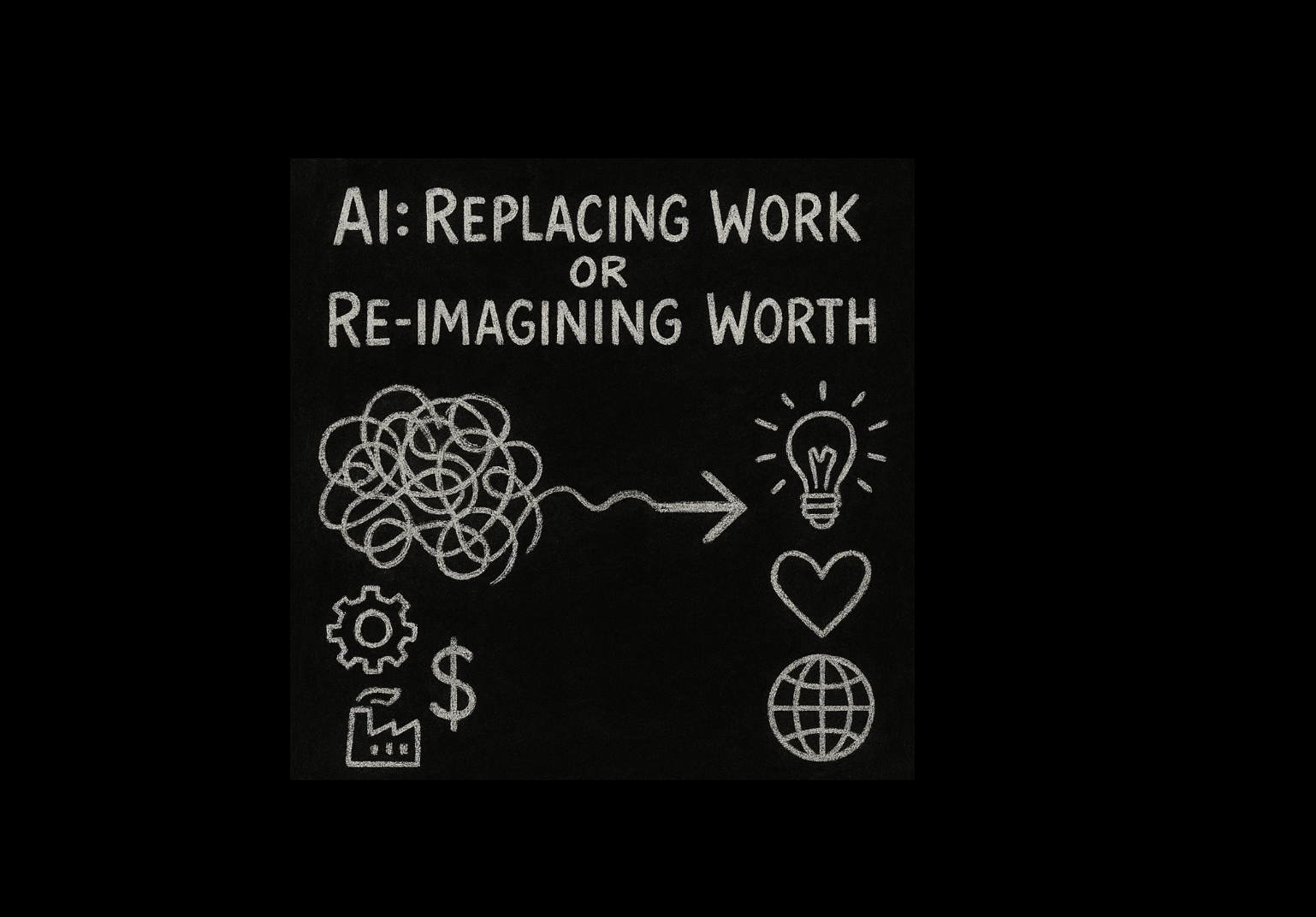
We keep hearing that AI is shaping our future. But who exactly is doing the shaping?
This had been on my mind, and the answer matters because it determines whether AI becomes a force for concentration or distribution of opportunity. Right now, I think we're at an inflection point, with a lot of leaders looking in the wrong direction.
My Manila Moment
At an Innovation Lab in Manila recently, surrounded by 150 Filipino change-makers and facilitators from nine countries, I had AI future-related conversations that were hopeful. Big thanks to my dinner conversation partners, Aurelien Chu, co-founder of Eskwelabs (Forbes 30 Under 30) and Jessie Hughes , Senior Creative Technologist (Artist-in-Residence + awesome human).
Our conversation centred on a strategically important question most of us aren't asking:
What if AI's highest purpose isn't efficiency, but equity?
We can play the Efficiency-only game, disappearing various tasks from already invented processes, but that is only one angle; we can also play a different game.
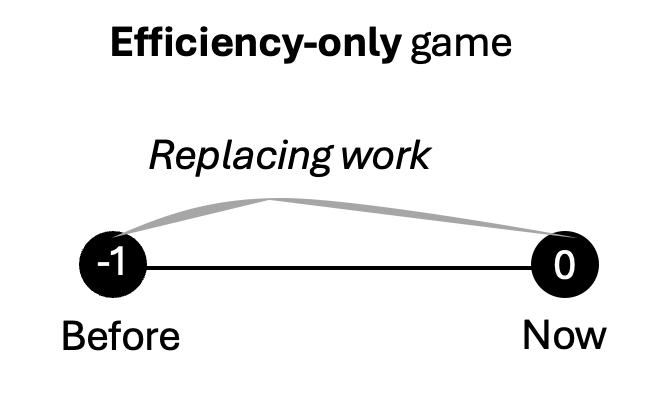
Aurelien put it plainly: "In a world creating more inequity, we need more innovators creating equity."
This isn't idealism. It's a unique framing, with different design principles underpinning it.
The Paradigm Most Leaders Miss
I think we are at a strategic fork in the road: We can use AI to reduce labour costs, or we can use it to multiply human capability. Most organisations and policy creators are choosing the former by default, not by design.
Reflect on three different scenarios Aurelien shared based on this framing:
Scenario 1: Scaling impact without scaling down people. What if growth didn't automatically mean workforce reduction? Aurélien had a vision of companies using AI to augment rather than replace, to expand into new markets while increasing their human workforce, by deploying people at higher levels of value creation.
Scenario 2: Democratising expertise beyond language and education barriers. Voice-based AI tools are allowing entrepreneurs in emerging markets to access capabilities previously locked behind language fluency and formal education. Imagine if AI could level up things so that communities with the least resources gain the most.
Scenario 3: Compressing the junior-to-mid-career timeline. AI agents are accelerating skill development in ways that benefit both new team members (faster to mastery) and organisations (faster to value). This isn't about replacement, it’s about acceleration.
The leaders who grasp this distinction are reframing value and will transform their organisations. They have moved beyond just replacing work.
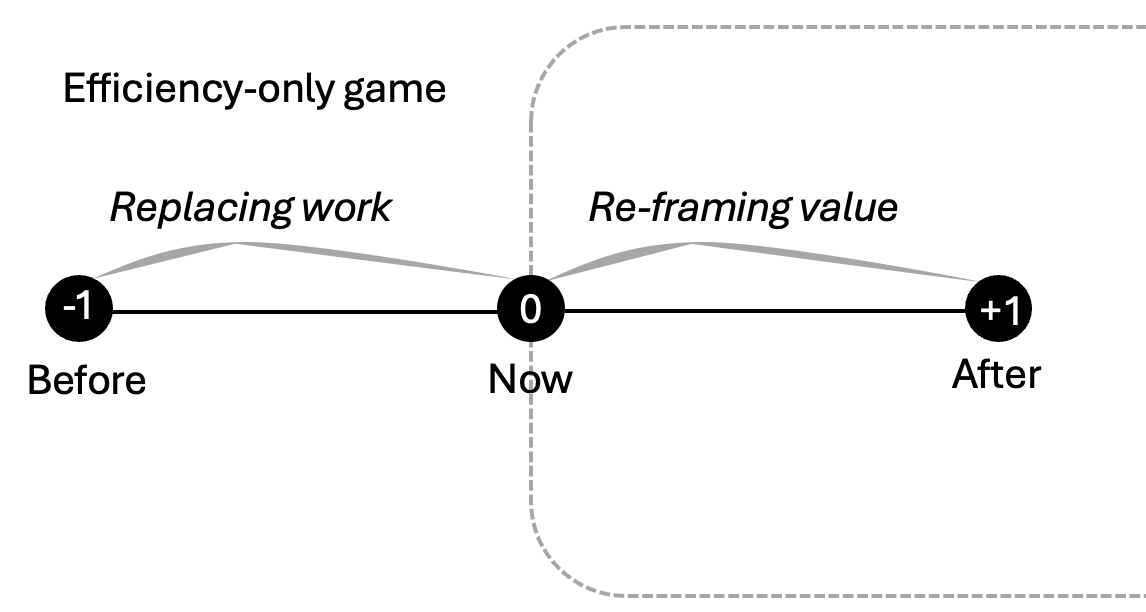
The Geographic Advantage Worth Talking About
Back here in New Zealand, the "semi-colon at the edge of the world”, distance is quietly stopping from being our disadvantage.
Digitalisation began compressing our distance from markets years ago. AI is now accelerating this.
We'll never compete on proximity or cheap manufacturing. But we can compete on something more powerful: exporting knowledge, innovation, and insight at a global scale, grounded in our unique Aotearoa essence.
I'm watching this play out as I mentor leaders and policy creators in different countries. The competitive advantage isn't about being everywhere. It's about being valuable from anywhere.
Window of Opportunity Limited
Here's the stone in my shoe or concern: Most elected leaders are still backcasting from today, using AI only as an efficiency lever to automate what already exists.
That's not a strategy. That's a gradual decline dressed up as innovation.
This is not intentional; it is due to a lack of awareness and/or opportunity to have the kind of open, exploratory conversations we had.
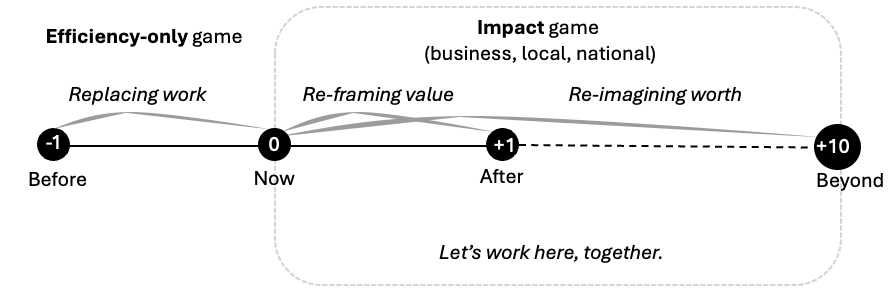
Some of us have lived through the “replacing work” centric approach before. Where cost-cutting becomes the only ‘strategy’. While the company gets an immediate sugar hit to its cash flow, the future suffers as no one is focusing on the growth drivers. Companies and even nations can fall into this pattern. Stripping efficiencies out of the past but not sharing a better future. (Rant over!)
Those that will thrive, who are intentionally creating better futures, are seeking to play the Impact game, ‘Re-framing value + Re-imagining worth.’ They have a different focus and are asking different questions:
· How do we use AI to create capabilities that didn't exist before?
· How do we ensure the efficiency dividend gets reinvested in human potential?
· How do we design for equity of access, not just cost-stripping?
· How do we re-imagine worth, and innovate for it?
© 2025, Jim Scully, All rights reserved.
The opportunity is now, with the dividend impacts flowing later. But we must act before the window swings shut.
An Invitation to Shape What Comes Next
How might we create more awareness at a senior leader level? How might we grab this advantage before the window swings shut?
If my perspective sparked something, subscribe to Leading as Designing — a global community for leaders shaping what’s next. And wherever in the world you are, if you’re ready to design better futures or just need a professional sounding board, I’m here for you.
PS. A big thanks Aurélien and Jessie for such stimulating and hopeful dinner conversations.
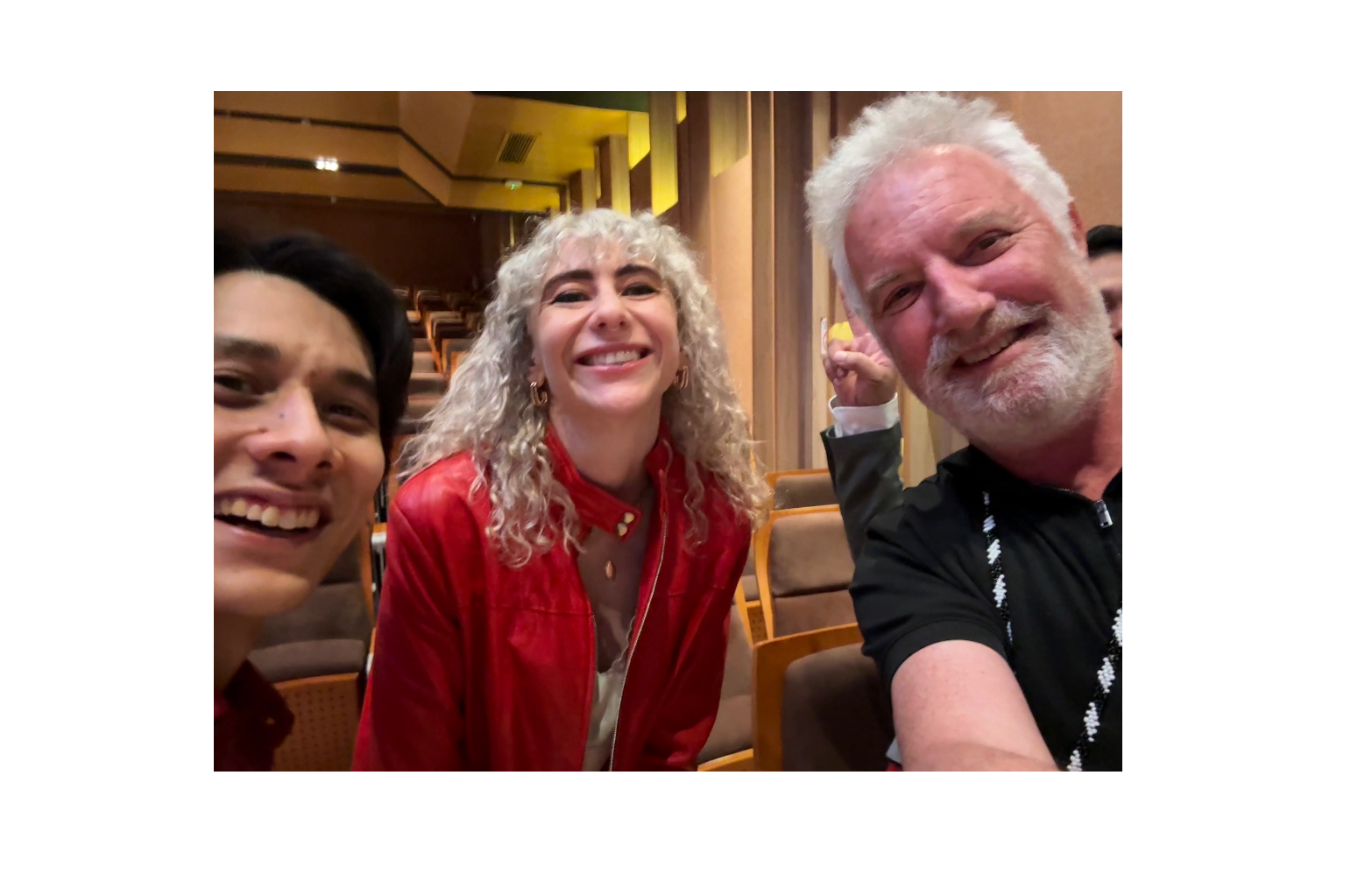
At the University of Santo Tomas, Manila.